I go walk among the living things
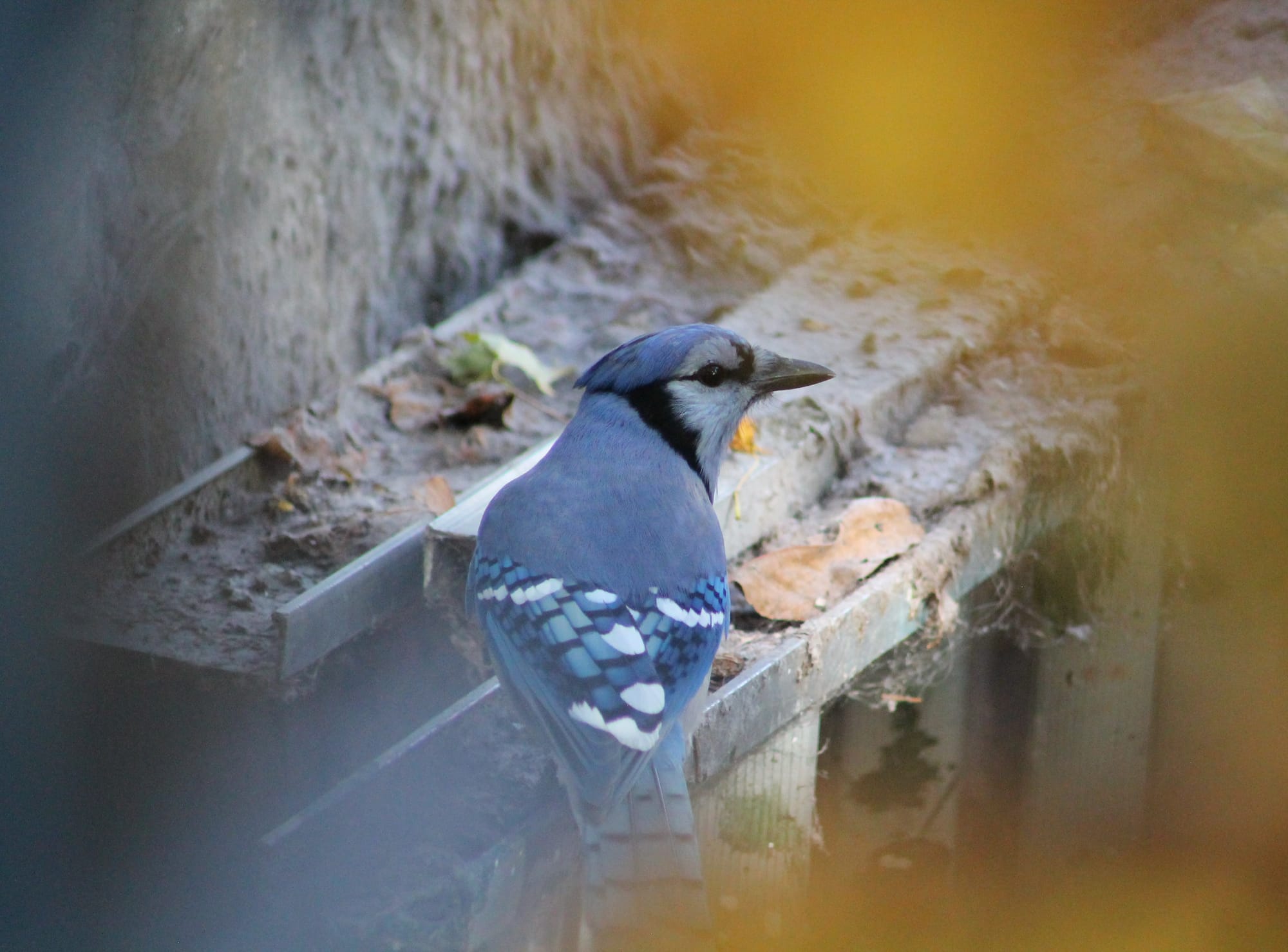
“Do you want to see a blue jay behaving strangely?” my sister calls from down the hall. “I always want to see a bird behaving strangely,” I respond, heading towards her. “Can I see too?” queries my mother as she follows behind me. All three of us crowd up to the window, peering out at the elderly apple tree—which only gets leaves on half its limbs these days, and drops all of its apples before they ripen—where a blue jay hops along the branches, stopping periodically to slap and rub the dangling thing hanging from their beak against the bark. It looks like a caterpillar. No, an earthworm? We go back and forth with ideas of what they might be doing with their catch, tenderizing it, breaking it open, before deciding that it looks rather like a determined bird, without the assistance of hands, attempting to rub the dirt off of an earthworm.
Later, stopping by that same window, my mother provides an update: the blue jay, presumably the same one, is doing the same thing over again.
This kind of speculation about why an animal is doing what they’re doing is only ever guesswork, but I am often fascinated at the individuality expressed by different birds, each their own feathery person with their own peculiarities.
I recently read the book The Forest Revealed, the kind of large, gloriously illustrated nonfiction picture book that holds almost as much delight for an adult as for a child. The illustrator, Jada Fitch, whose project this mainly was (though with genuinely lovely prose provided by author Koteri Kasek), is based in Maine, a state which shares a border with my own province of Québec. This means that the forest being shown over the course of twelve months is one that’s very familiar to me, featuring a host of different living beings that make up the northeastern American and southeastern Canadian part of the world (ecology shows very quickly the absurdity of borders). It’s the type of nature book my mother would have bought us when my sister and I were children, and we would have all crowded around it to pour over the pages, exclaiming over all of the different mammals and insects and slime molds, excited to see what we could find ourselves. I’m still excited to see what I can find, the birds (since my bird-obsession began) are all recognizable to me, but many of the smaller animals, the plants and fungi, are less so.
We three are in a strange space as adults of still living together and relying on each other, disability having maintained a physical closeness that likely would not have existed otherwise. In many ways it’s difficult, but one of the things that has always been common ground between us is a love for the natural world.
There was an interview clip with botanist and author Robin Wall Kimmerer going around online recently, where she asks “how are you going to fall in love with the world if you don’t pick berries? That’s the gateway.” And I think about the late summers spent in Gaspé, at my great-grandmother’s house, where that abrasive, mischievous woman in her late 80’s would head out to the forest edges behind her house, stained 5 gallon bucket clutched in her hands, to fill it with wild blueberries. I’d watch her go from the upstairs window, as she never brought us children out, but my mother did. The three of us together would fill one bucket, carefully plucking berries from the shiny-leafed bushes that grew, tenacious and woody, around the spruce trees (blueberries like acidic soil, and I have heard that evergreen needles break down into sour ground). One year we brought our small fox terrier, Flora, with us and she quickly learned how to pick them too, roughly pulling leaves off as well as fruit with her enthusiastic jaws.
At home, my sister belonged to a “nature club” made up of a group of homeschooled children around her age, and the both of us attended a summer camp at a zoo housing only animals found in the Saint Lawrence River Valley in which we resided, where I later worked briefly as junior staff (my views on zoos may have turned very negative as I grew and learned more, but I can’t deny that I gained a greater familiarity with many local animals). Posters of wildlife adorned our walls, and identification books lined our shelves.
Despite all that, none of us did much more than dabble: there were simply so many things to learn about, and focuses shifted elsewhere, followed different routes.
My sister and I were, however, raised to pay attention, to stop and admire an interesting moss, a feather on the ground, a large bird flying overhead. I did not stop loving the world I was only beginning to know as a child, but I did step back from it for a long time. To truly know something being dismantled piece by piece for extraction and profit is to feel a constant, gnawing grief.
I am learning and relearning now, in my thirties, how to love despite it all, to seek understanding even when it brings pain with it.
October has been so warm, warm in that frightening way that’s become so familiar, a wrongness of unseason at odds with decades of knowing how the progression is supposed to go.
In her essay A Circling Story, Holly Haworth writes of her practice of “phenology,” the written tracking of the seasons, that upon learning of climate change in her youth, “[a]ll the seasons of my life flashed before me as it sunk in that no season would ever be the same on a warming planet...This is why I have been turning my attention toward the seasons so devotedly these past many years, keeping my field notebooks: to draw myself closer to the earth’s cycles whose disruption is, in fact, the most important story of our time.”
Since my own devotion has turned towards birds, I have been thinking about how much I want to keep personal records of all the birds around my new house when we move, how it changes day to day and year to year. Lately though, I’ve thought why wait, when I could start keeping a journal sooner? Maybe I should start January 1st, with the new year. Or better yet, the winter solstice, so I can track the life around me as the sun slowly begins to return. It feels like the starting point should be something weighty and meaningful, but I know that’s foolish. I should probably start tomorrow.
With the warm nights, I’ve had my window open more often. Several weeks back, I woke up in the middle of the night, a soft coocoocoocoo singing through my window along with the scent of damp earth. My first thought was screech owl, but not trusting myself fully, I felt for my phone beside me in bed, squinting at the bright light of the screen while I pulled up the Merlin app, turned on the sound ID feature, and held it up to the window: eastern screech owl immediately appeared on the screen.
A week later, not far past sunset, on an October evening that had not yet dropped below 15° Celsius, I heard them again, their whinny this time, a descending HOOhoohoohoo. On this occasion my sister was awake, and the two of us froze, silent in the kitchen, our rapt attention on the darkness outside, which somewhere close by held a small, fluffy owl, their voice as soft as I imagined their feathers must be.
I first heard an eastern screech owl in my yard a year ago, in the very same month. They become more active in the fall, beginning courtship, staking out territory, as they look forward already to the breeding season in early spring. I didn’t write down the day I first heard them, and I didn’t write down when I heard them this year, either, so I can’t know how the two dates compare.
But I know that a year removed creates a pattern, a cycle, and every October now I’ll be turning my ears toward the quiet dark, waiting with anticipation for an owl.
Every time I try to write it feels like I’m trying to walk beside a pit in the ground, one which I’m refusing to look at, while trying to step carefully around it anyway. Not that, that’s not what we’re thinking about, I tell myself. You likely won’t be surprised to know that pits don’t just disappear when ignored.
My sister’s health has been getting worse for a couple of years, but several months ago it got abruptly much worse.
When someone becomes more disabled, either temporarily or permanently, there’s a tendency for those close to them to make it about themselves, instead of the person who’s ill. That’s something I desperately don’t want to do, because my sister deserves the dignity of her own life, her own processing, and a focus on her health, rather than her family’s feelings about it. I do not wish to write about the pit.
And yet, my life did shift with stomach-dropping rapidity, and I now find myself living with a reality I was not living with six months ago. What is my role, what choices am I to make now, and what will the future look like? I don’t know, and the not-knowing eats at me, too.
As people have, I imagine, always done, I go walk among the living things.
I get up earlier and earlier, and watch the sunrise colours spread across the fall sky. I make a quick breakfast (two packs of instant oatmeal, each a different flavour, stirred carefully together in a spring-green bowl), I fill my water bottle, sling my camera over my shoulder, put on my hiking shoes, and head out into the cool mornings.
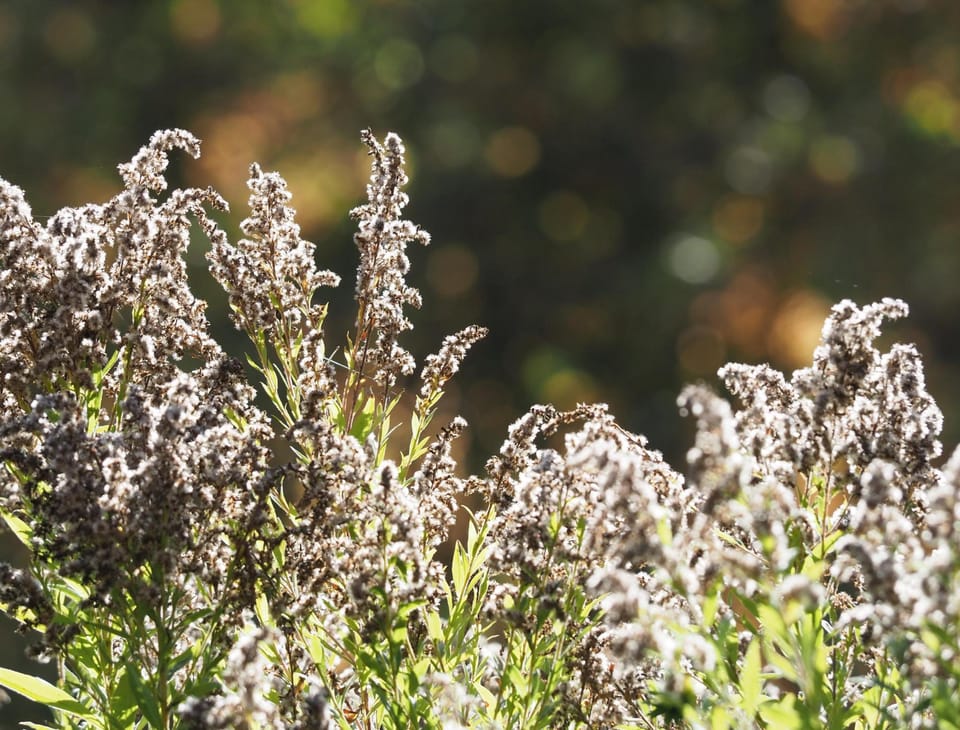
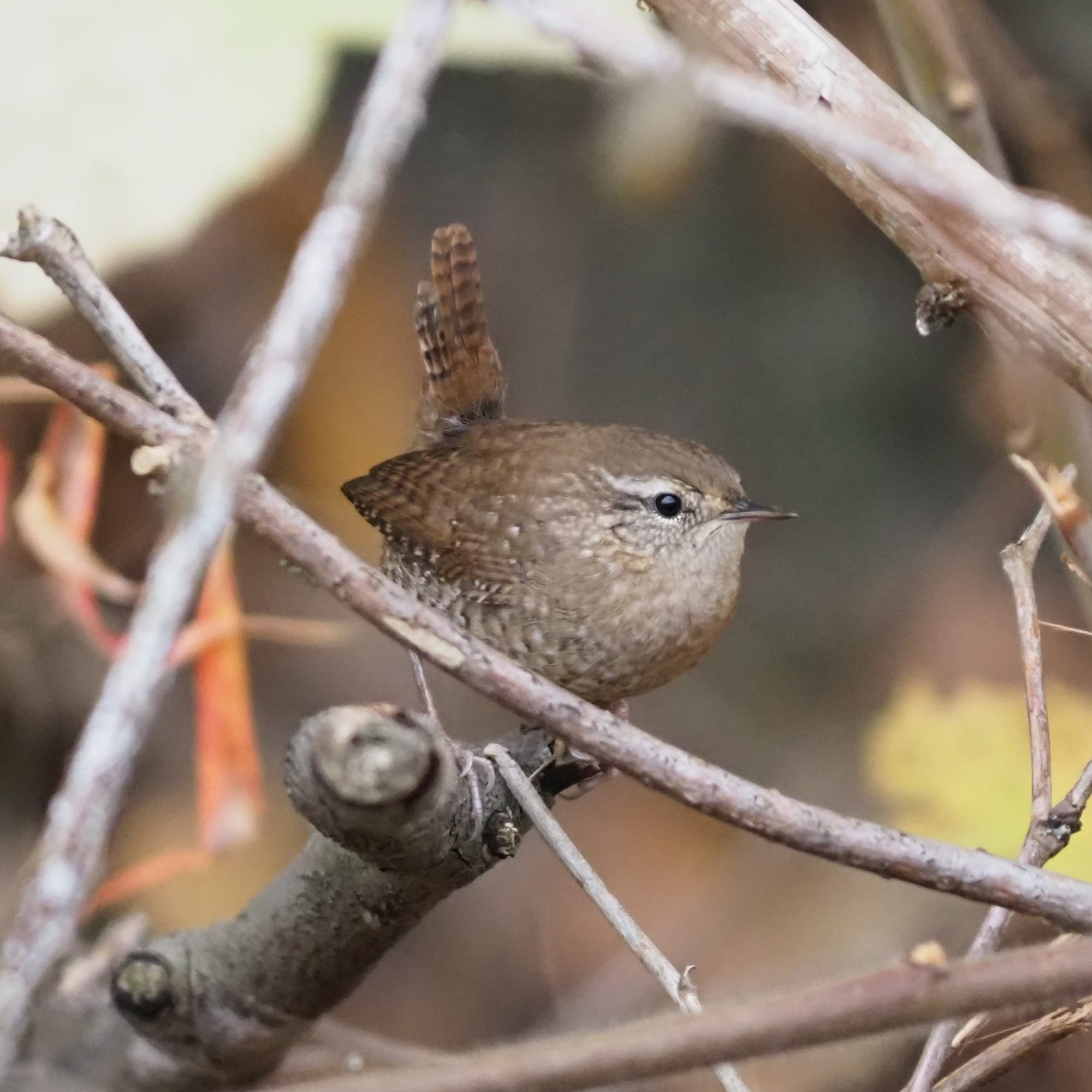
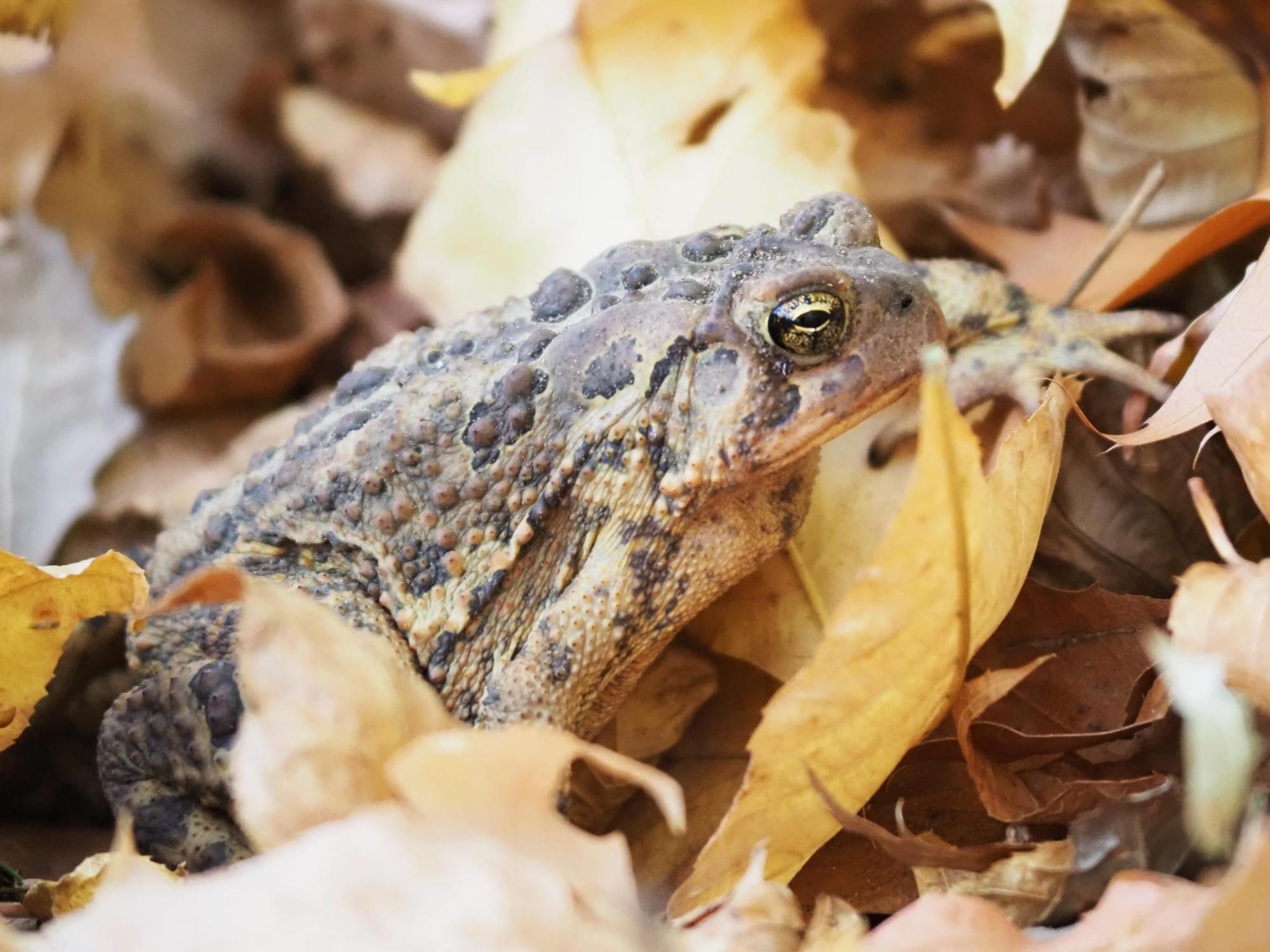
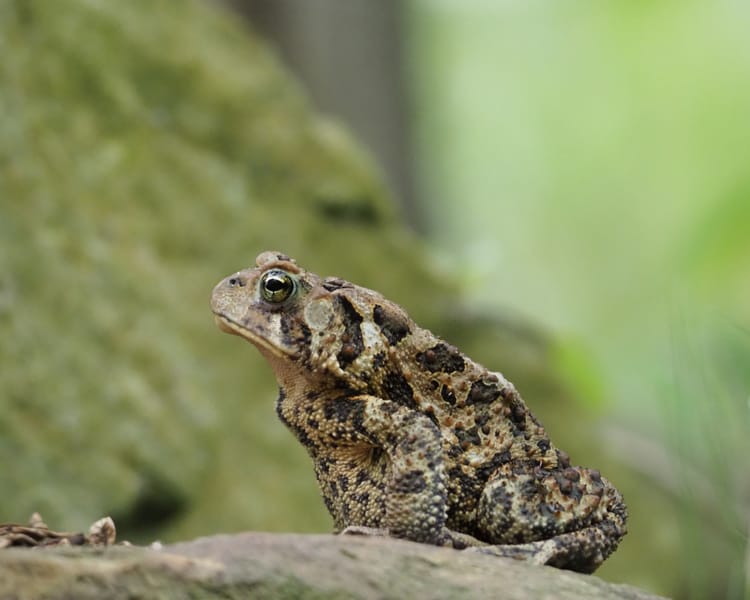
I walk the same path, day after day, listening for the calls of birds and the rustle of small bodies in the grass. I watch the sun suffuse the goldenrod seed heads with light, and the winter wren hopping jauntily through a tangle of dead branches. Two American toads pull themselves sluggishly along in the chill, one, already off the path, with a head wound oozing blood. I watch them somberly, wishing them healing if possible, an easy death if, as I suspect, it’s not. I gently help the other one across the path, their skin cool and dry, almost soft beneath my fingertips. I carefully step around a dead northern short-tailed shrew, and I try to guess if the red-shouldered hawk I hear is really a hawk this time, or just one of the many blue jays ranging around (while occasional ones may, perhaps, not appreciate dirt on their worms, all of them seem in agreement on the joys of mimicry).
We used to walk together in the fall, my sister and I, and this year I’m alone. I start picking up things to bring home—a very large red oak leaf, a sprig of dried brown bracken fern, a small branch of fiery red staghorn sumac leaves, some kind of narrow and sharply pointed seedpods, filled with miniature silken seeds like tiny milkweed—and presenting them to her on her waking, late, each morning.
Connection to the world takes many forms, and sometimes it lives in books, or an owl outside your window, or in an exceptional fall leaf.
As the days become short and dark, most of the leaves fallen, the highway hawk-watching begins. No matter which combination of us are out (more often my mother and I, these days), we’re always looking for raptors perched on the trees, utility poles, and fenceposts along the roads, the open spaces providing good hunting grounds. We’re looking especially for the first rough-legged hawks of the season, arctic breeders who overwinter here, with their striking plumage and captivating habit of hovering when hunting. We’re also talking about making a drive together out to a road in the middle of farmfields that almost always has snow buntings in the cold months, more arctic arrivals here to spend the nonbreeding season in the large, flat stretches of land that remind them, I imagine, of their tundra homes. A car birding trip, if it’s not too long, is something my sister can still do, the car acting as a blind as we stare out of the windows at the swirling, chirping flocks. The three of us ready to welcome the winter arrivals once again.
Member discussion