One moment, then another one
Content warning: the death of a companion animal.
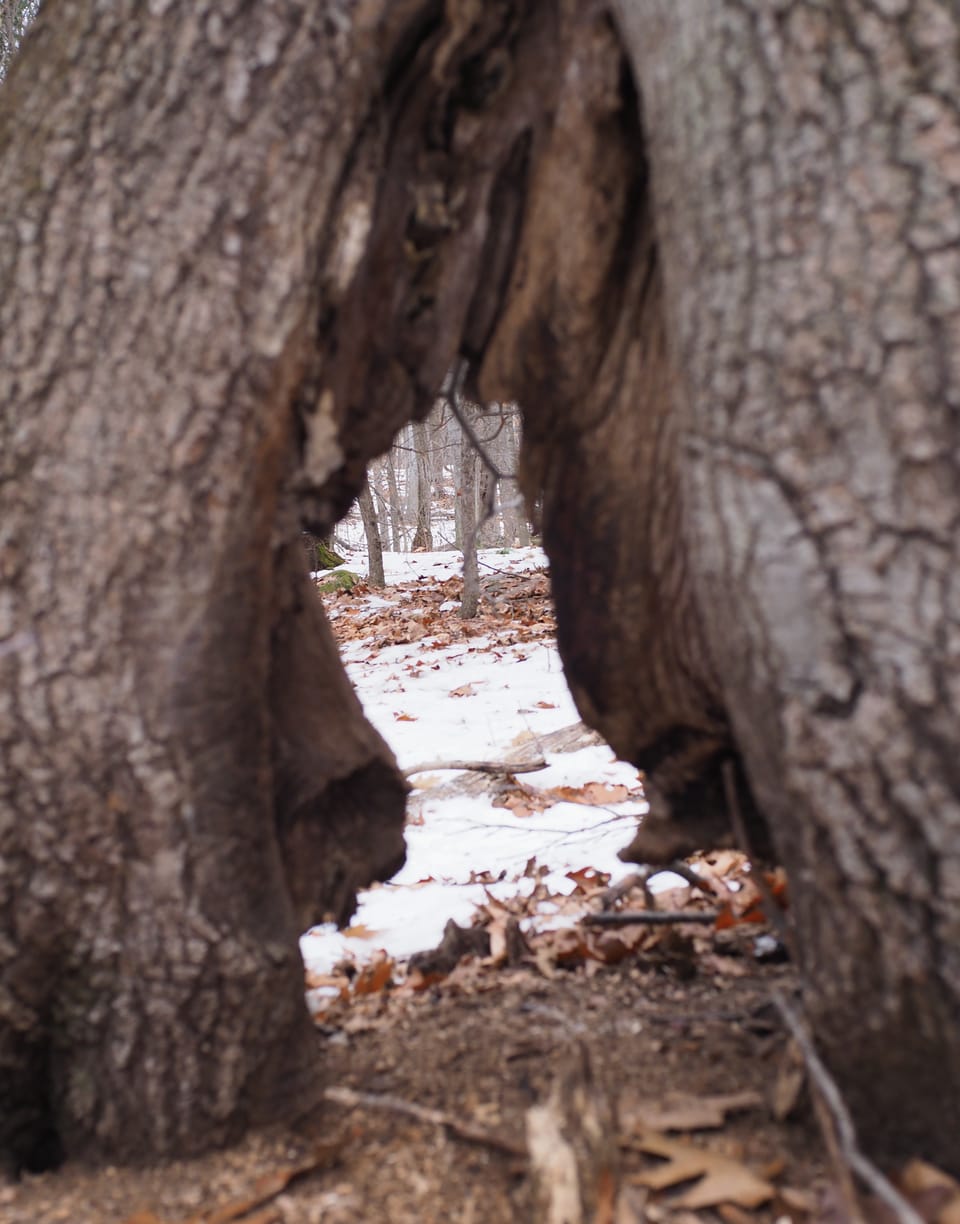
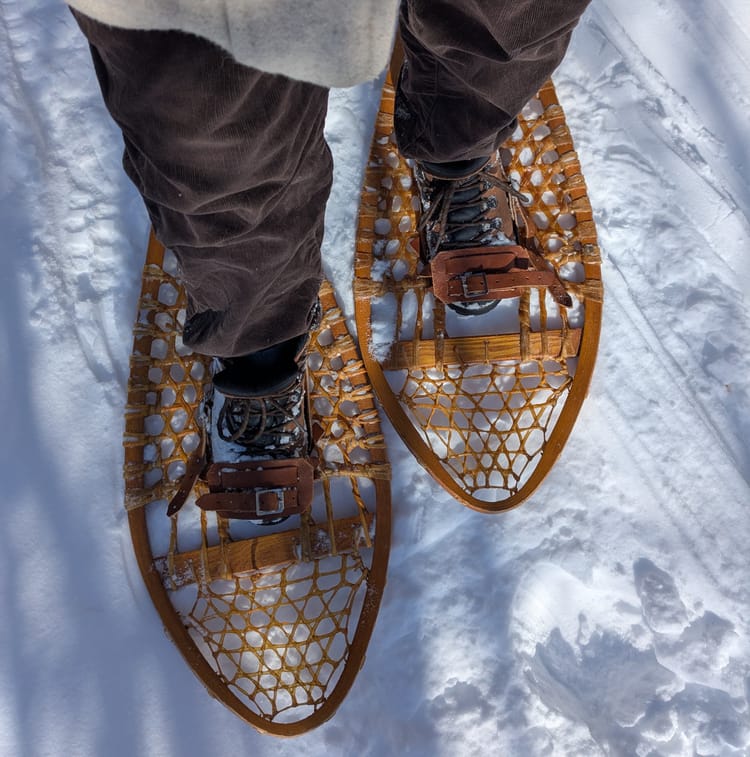
It was the winter solstice, so while the winds were high, the ground icy, I was determined that I would not let anything get in the way of my walk. A walk to greet the new year, a more tangible start than any date on the calendar.
I stepped carefully, the ground covered in the crunchy remains of half-melted then re-frozen snow, but with occasional patches slick enough to send a boot sliding. I kept trying to listen for birds, but the trees were alive with wind, screeching and moaning, circling as much as their grimly clinging roots could bear, the voices of branches and birds and stream blending into each other.
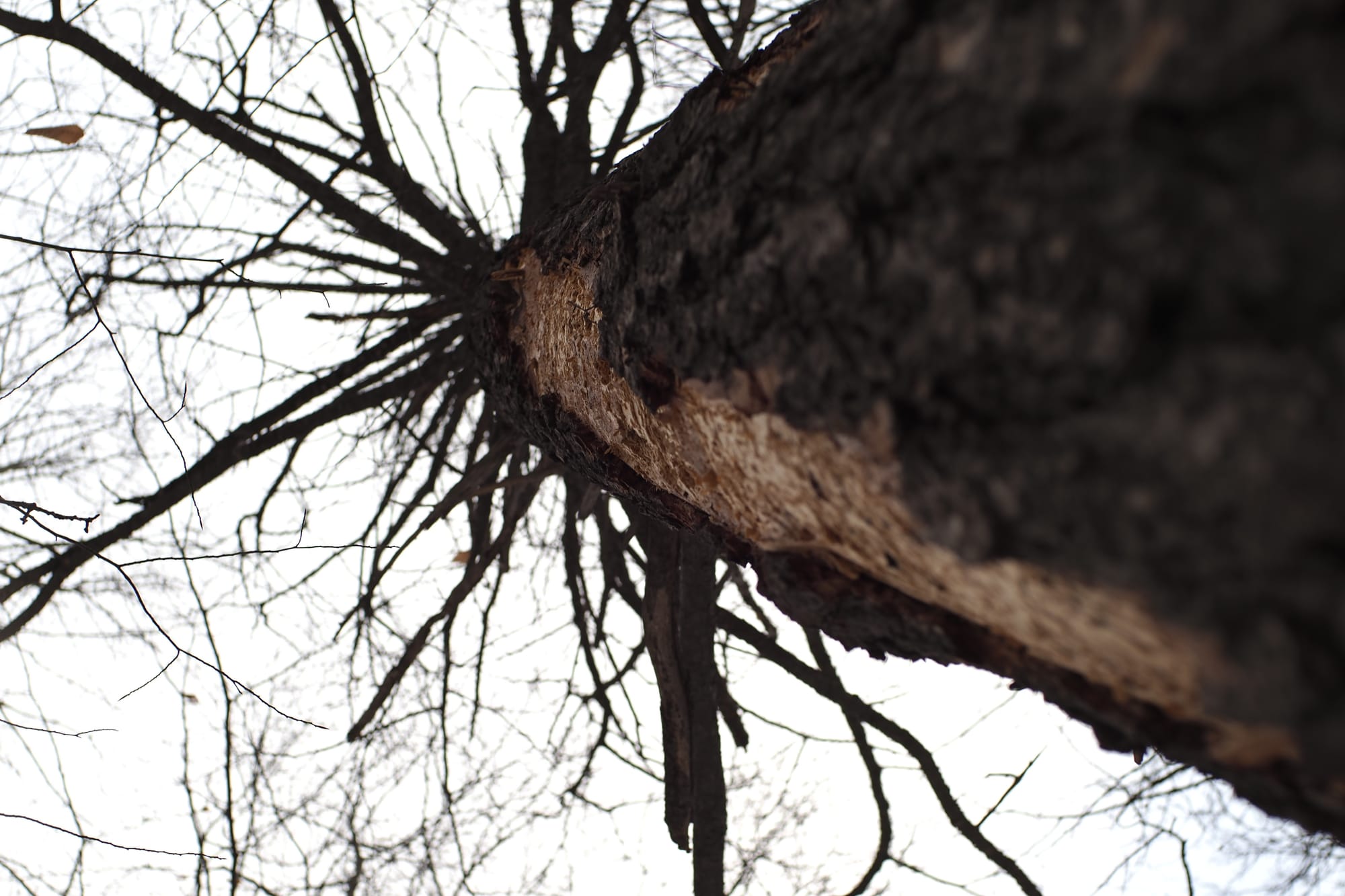
As I made my way further, stepping over downed trees in the path, their roots having let go, now bared to the wind, I began to feel a little nervous. It’s a new forest, as these things go, regrowth from land that has been cleared and cleared again, made up mostly of maple and beech and oak, with a few wispy hemlock stands near the water. If a 30-foot tree fell, it probably wouldn’t kill me, I reassured myself, doubtfully. Some of the trees, instead of groaning in their branches, called from low and deep in their trunks, close to the ground, and those ones I walked past quickly. The uncertainty of air and trees and ice left me strangely on edge, even while I relished the aliveness around me. Things could go wrong so quickly.
On the night the year began again, I was not much interested in celebrating. The hour struck twelve while I was in the shower. But my sister declared this year to be, outside of any zodiac, the Year of the Owl. “We’re going to see a lot of owls,” she said, she just knew it.
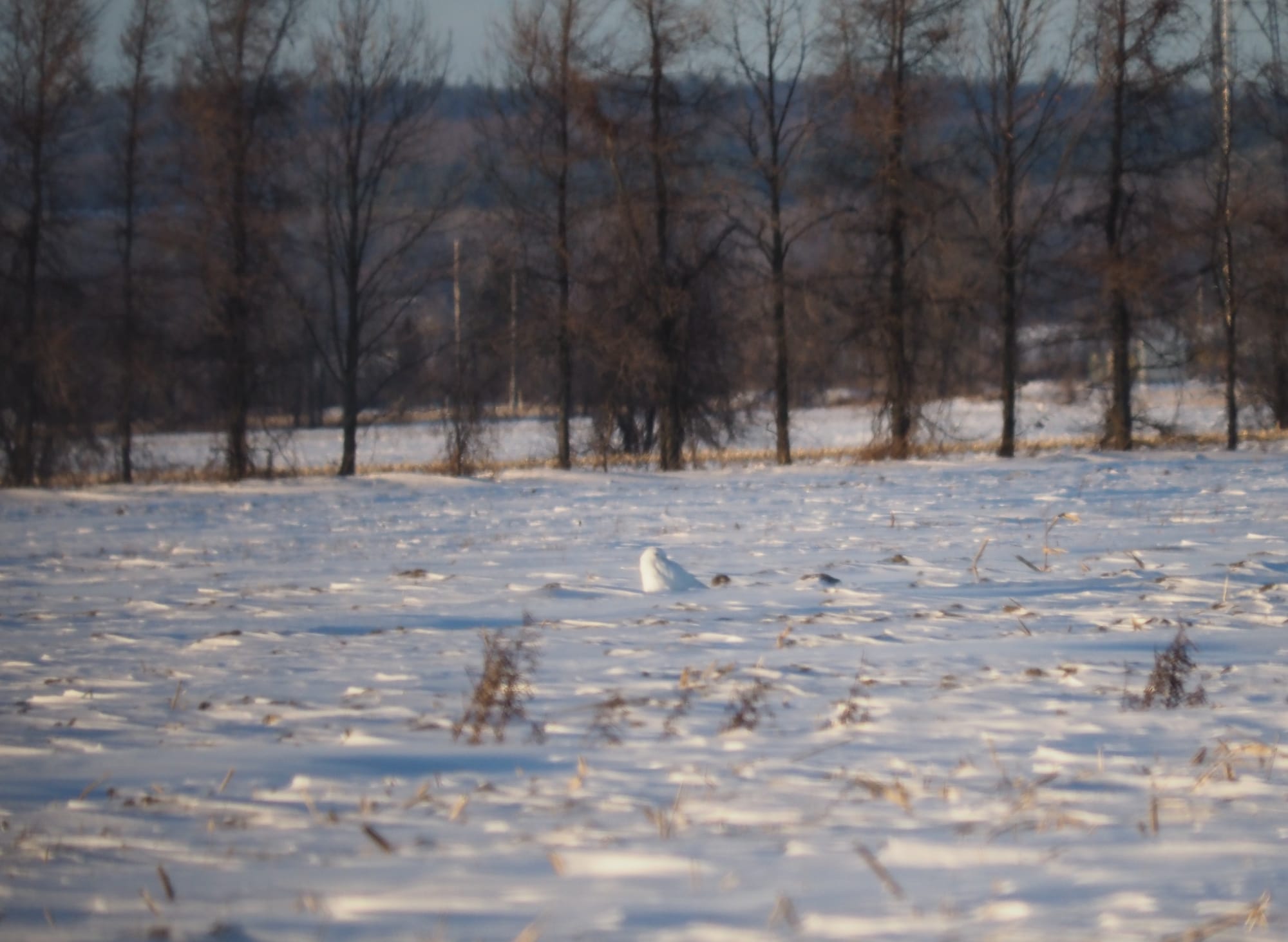
Though my sister was not well enough to come, I went looking for snow buntings and snowy owls the next day. Almost immediately, on a familiar road frequented by both, my mother and I came across a car in the ditch. We stopped to ask if the occupants were okay, but the driver waved off any concern (he was fine and the tow truck was on its way), instead excitedly asking “have you seen the owl?” The owl that had, he indicated wryly, led to a too-quick stop and an inevitable slide off of the unpaved road, into the soft dirt of a field only barely covered in snow. He pointed out into the field across the road, way out, and as soon as I turned my head, I saw them. The whitest snowy owl I’d ever seen, though considering this was only my second snowy owl, I suppose that’s not saying much. A male then, with that colouration, and an adult, though so far away they were little more than an owl-shape on the snowy ground, glowing in the late afternoon light. This seemed, I thought, an auspicious start for the Year of the Owl.
That night, one of our cats abruptly collapsed. In the panicked rush where time becomes strangely elastic, I can no longer remember the exact progression of events: the checking over grabbing a carrier giving instructions cradling. But there was a heartbeat racing against my palm, far too fast, and then it stopped. Only a very few minutes from beginning to end, though I couldn’t say how many. Under five.
Bea had never liked owls. It was a quirk of her good memory, that she would ignore the calls of most birds when I played them on my phone or she heard them through the window, but would immediately become wary and alert whenever it was one of our native owls. She’d started her life in the woods and fields, and through a decade spent in the comfort of a home, as a dearly loved house cat, she had not forgotten to look out for hunters on quiet wings.
A week later I stood outside a crematoria, a place which called itself an animal funeral home, but which had at its heart a giant furnace, the muffled roar a constant presence, industrial fans humming and chimneys venting into the sky. I couldn’t see it as anything else. I wanted the fields behind it to have an owl—perhaps a short-eared owl or a snowy one, the kinds that like open spaces—because my sister loves owls and surely she deserved something good. The fields were empty though; the only bird I saw was a raven perched on top of a storage tower across the street, magnificently large and strikingly dark. I wondered if the view from where they sat was lovely, or at least interesting: an expanse of snowy fields and woods on one side, roads and industrial buildings on the other, all cast in the muted light of a pale winter day. I don’t know what’s lovely to a raven, though I hope one day I find out.
I don’t believe in omens, and I refuse to turn another living being into an abstracted sign, to force their life and their presence into a simple shape and answer. A raven has no more to do with death than does the hawk, or the squirrel whose ending feeds them. I can learn from and come to know those creatures, but only as people themselves, as ordinary beings, individuals with interiority, agency, the ability to form bonds. Each of us moving through one moment, then another one, until our hearts stop.
My thanks to the volunteer editors who helped me polish this piece.
If you wish to read more essays like this, please consider subscribing.
Member discussion