Willow Toes
One day, a red-tailed hawk circled above me, crying their movie-eagle cry, their shadow in the bright sunlight flickering over the newly-leafed trees, over and over again. I watched the shadow not the hawk.
One day, a flock of snow geese passed overhead, their voices ghostly, bodies invisible in the heavy fog.
One day, common goldeneyes bobbed in scattered rafts across the wide, ice-strewn lake, singing their frog-calls in the first open water of the year, while I stood on the shore, and the slushy snow plopped into the water.
Over two years ago I saw a bird in a way I'd never seen a bird before: I saw them—tiny and warm on the pine needle strewn ground—through the lens of my camera. The bird continued on their way, a chipping sparrow with their own concerns and little time for mine, but my life started changing. Everything became bird-shaped, the leaves falling and the snow blowing, a scatter of rain or shifting light. Any movement or sound could herald a feathery being, a beaked and scaly-legged creature whose life was every bit as real as my own. They were all out there, and suddenly, I was too.
When I was a child, I devoured books about children living in the so-called “wilderness,” the spaces we are meant to believe are separate from humanity and the built world, as if hawks and humans do not live alongside each other. My Side of the Mountain by Jean Craighead George, Island of the Dolphins by Scott O'Dell. I feel a great suspicion that, were I to read these books again with adult eyes, they'd look different in troubling ways (both authors were white, and both wrote books featuring Indigenous protagonists in an era with even less understanding of what was owed in taking on that responsibility, or consideration of whether they should do so in the first place). But what drew me to these stories was the belonging that these fictional children experienced, their ability to slot themselves into what was not truly an outside-world. I wanted to recognize birdsong, and tracks in the snow. Wanted to walk silently in the woods and understand the language of bears.
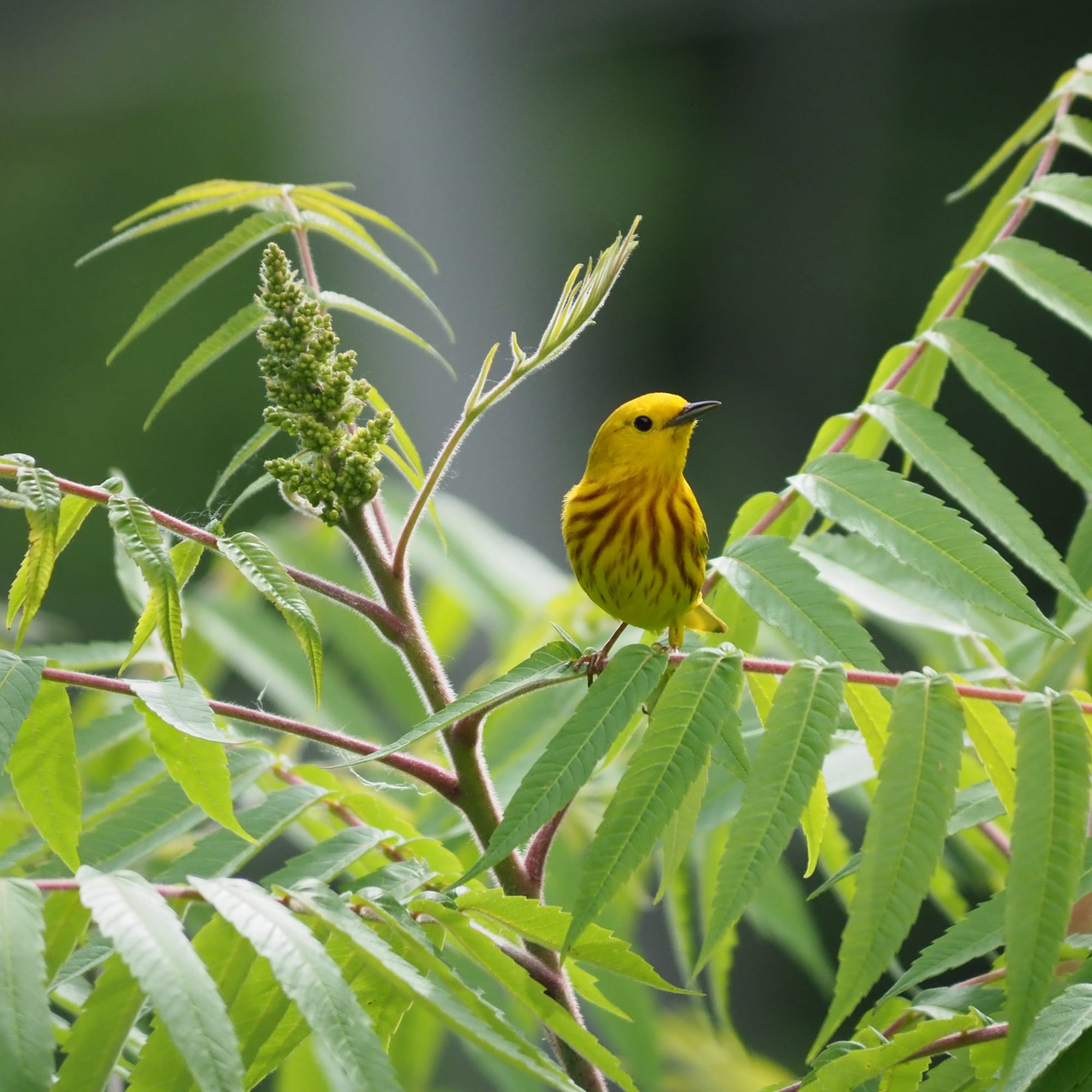
Now, as I walk through a mixture of forest, scrub, and field with ears open, carefully categorizing each song and call I hear—northern yellow warbler and common yellowthroat, eastern wood pewee and eastern phoebe, song and chipping sparrow, red-shouldered hawk and merlin—I feel like I am finally beginning to become the person my child-self dreamed of. I am hungry for the world to become more legible, and familiar in that legibility.
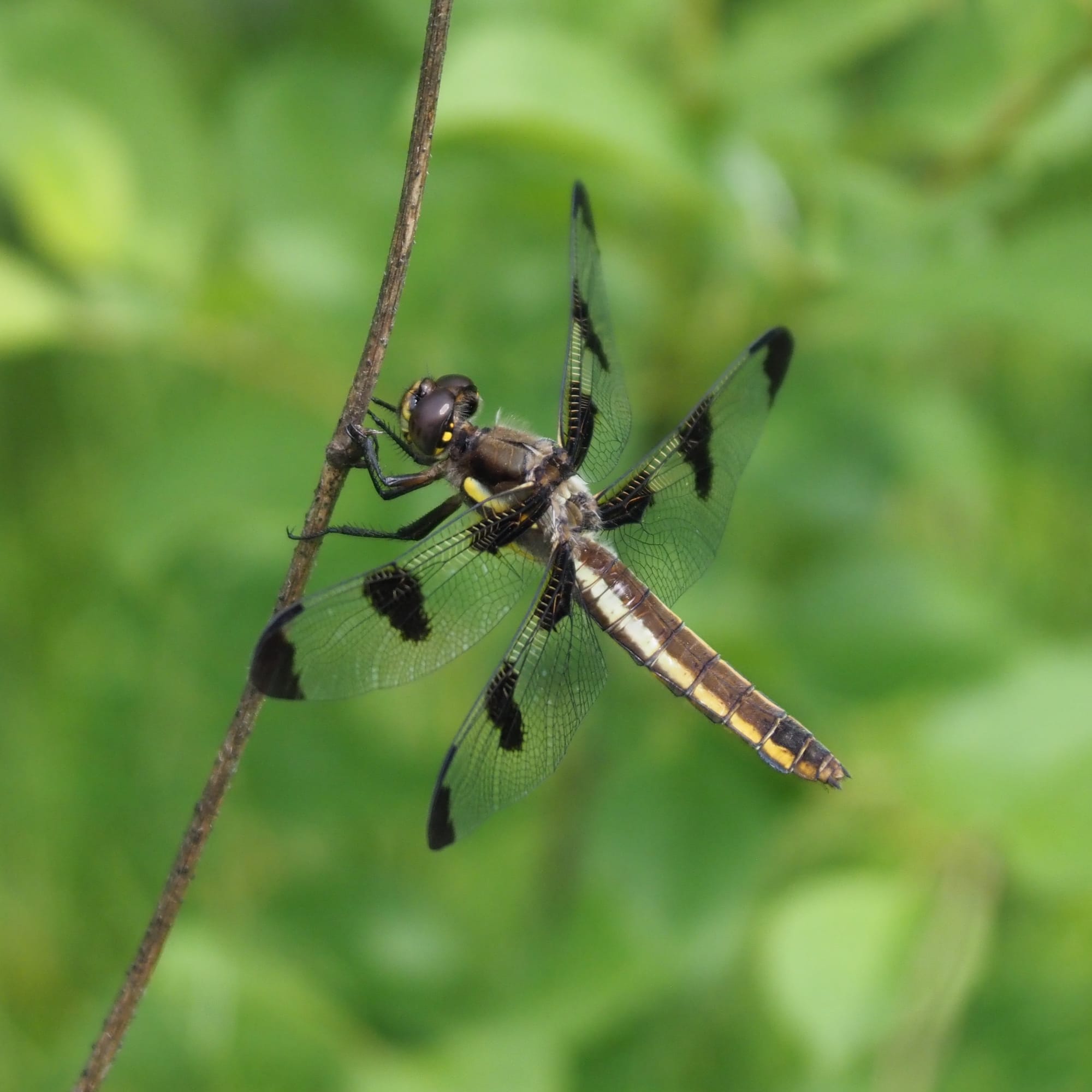
I can see the dragonfly's head tilting to track me as I shift from my crouching position several feet away from them. I have found that many individuals have an uncanny ability to sense my approach from ten feet away or more, darting off from a hidden perch in a whirr of wings before I've managed to spot them, heading up, up over the browning grasses and reddening sumac leaves.
Spending time looking for warblers, butterflies, or snakes necessitates an awareness of my body's movement and stillness, the sounds I create—whether intentionally or unintentionally—the spaces in which I place my feet. There is a comforting aliveness in recognizing that I am being considered, that a mind quite different from my own is deciding whether I'm a threat or an object of curiosity, a predator or food. To be seen and sensed by other beings acts as a tether to reality, a rooting in the world, an assurance of our own existence. We shape each other by sharing the same space, and the same world.
Sometimes I am viewed and dismissed, deemed no more important than the stones embedded in the dirt path. What I want is to be not-a-threat, whatever else I am to the crow or the paper wasp. Sometimes I fail, I push too close to a bird looking for a better photograph, only for them to flush in a clatter of wings, guilt sharp and stinging at my own self-centeredness. Other times, as hard as I try I can't pull my awareness close enough to my body to be truly present. I'm too tangled up in anxiety, something large and clumsy scattering through the trees and along the shoreline, the ragged edges of myself startling every creature I encounter.
Increasingly I feel untethered to a notion of gender itself. I am gendered, continuously and aggressively, without my participation or consent, within a patriarchal culture that sees not-men as resources to be exploited: for labour, for sex, for reproduction. I am oppressed because of that gendering, but when it comes to an internal sense of self, I don't feel any particular connection to it. I don't feel any dysphoria attached to my body either, my breasts or legs, my face or genitals, but the contours of myself feel like mine, not those of a "woman."
I once told a friend that I felt the least attachment to gender when I was high, or lost in the most intense manifestations of migraine fog, when my sense of self shifted into something more elemental. Over time that shift has begun to feel more permanent, and it is in the living world among all the beings who exist outside of human culture, outside of my own culture's imposition of an ill-fitting selfhood, that I often feel the most at home.
One dark winter evening, without any light but the reflection of moon on snow, I hear the tramping rustling sound of footsteps through the packed drifts, the fox and I both spotting each other at the same moment, both freezing in startlement, deciding what to make of each other. Their shape is shadowed, a fox cut-out against glowing white, my breath held. I am fascinated by the taut awareness that snaps between us, how the fox and I both carry with us the weight of past encounters with foxes and with humans, yet are caught for just a moment in the empty intimacy of surprise.
Gender is meaningless when I exist in living conversation with the world.
I see a pin from an artist I follow, Arcane Bullshit—creator of dark, absurd, and funny art and apparel—reading "future home of worms". I laugh, but I keep revisiting it, keep wondering if I should actually get it.
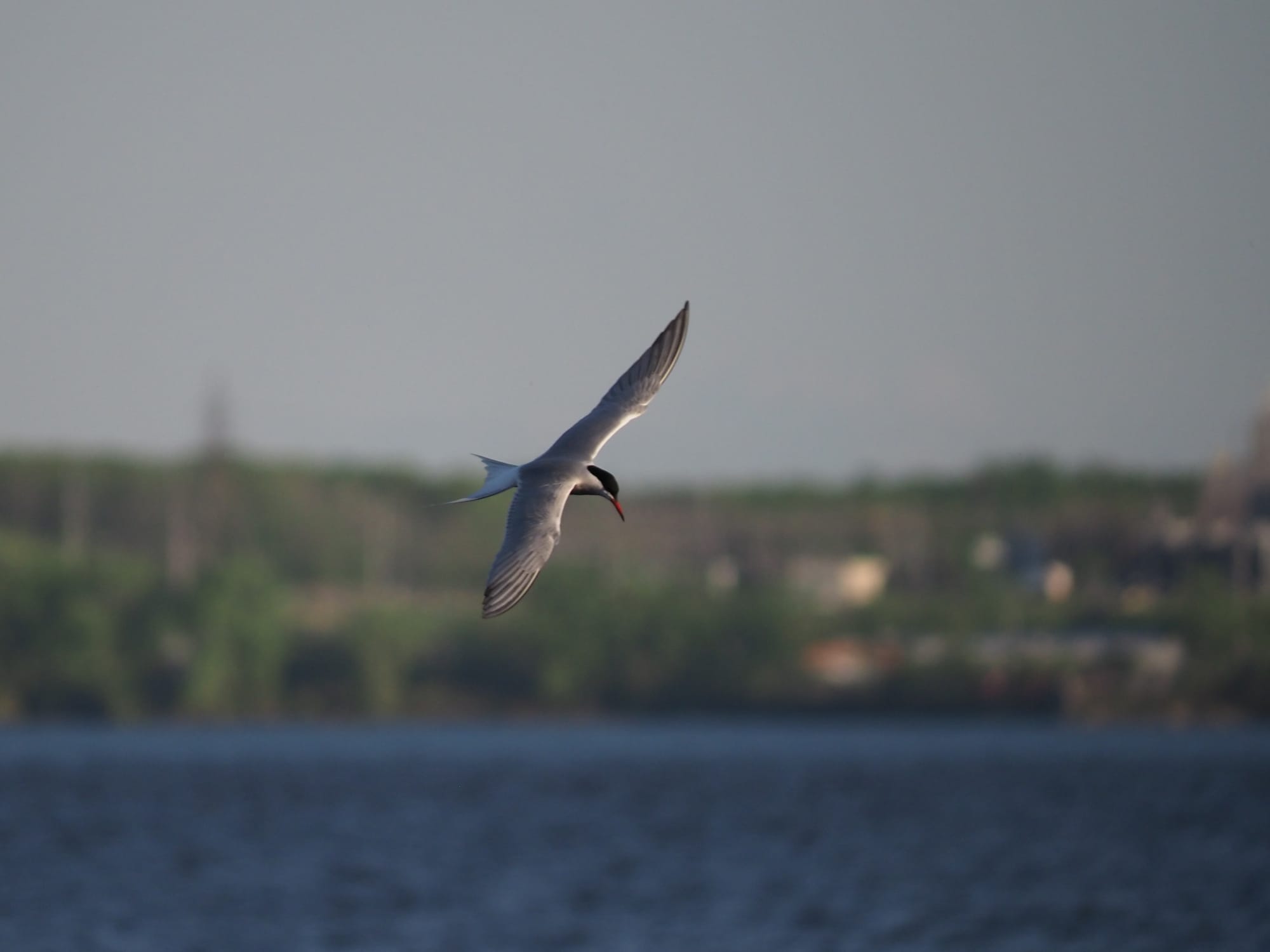
I should probably make it clear, first, that I don't want to die. Or at least that the times I don't wish to die greatly outnumber the times in which I do, so that, on average, it's a true statement. I am, though, in a stretch of great personal grief, of loss and uncertainty, and in my worst moments of terror and despair, the existence of a form that breathes and bleeds has been an anchor. A comfort exists in the knowledge that I am made of the same matter as the chipmunk and the tern, that we are of one flesh, of one earth.
I feel the same frustration most people do—sometimes bordering on rage—at being fed on by the seemingly endless mosquitoes, and I will certainly crush their bodies against my skin, yet there's also a certain grounding effect in the proof of my existence within a web of survival, written in scattered red dots across my arms and legs (as the poet Linda Hogan wrote, "to enter life, be food"). I do not believe in a soul, in an untethered continuance past death, but I don't need belief to know that a body placed in the ground will decay, will be food and homecoming.
I know queer friends who wish passionately for a release from the physical form, not out of a wish for death but a wish to exist beyond and outside of a body. It's something akin to a longing to be free from the perception of others, which I also want dearly, but it is not the same. To me that thought has always been abhorrent, the flip-side of body horror, the horror of being anything other than embodied.
I have taken to treating every dead animal body I find as an opportunity to learn more about life. A cormorant who spent the winter under a thick blanket of snow, feathers sloughing off in the spring, shows the underlying structure of their skeleton, delicate bones I do not yet know the name of. A skunk, their ribcage opened up to the sky, skin pooled around them like a discarded coat, teaches me that their greatest predator is the great-horned owl, a watchful, quiet death which drops from above.
Is it strange that these bodies, too, feel like kin? Proof of our shared living and dying, of our belonging.
I wonder sometimes what it says about my relationship to the living world that I first truly saw birds through the lens of my camera, and that I have taken to pulling out my phone on every walk in order to carefully make a list on eBird of all the feathery creatures I see and hear. I love those lists, the pool of data I'm contributing to, and the record of my own sightings to look back on—when I encountered the first red-winged blackbird this spring as compared to last, when and where I saw a redpoll for the first time—but this identifying and list-making is an incomplete knowing, abstracted, fragmentary and shaped indelibly by colonial ideas of how the world should be seen and touched. What does it mean to strive for legibility, as if identifying equals knowing, or recognition belonging, when they are not the same things?
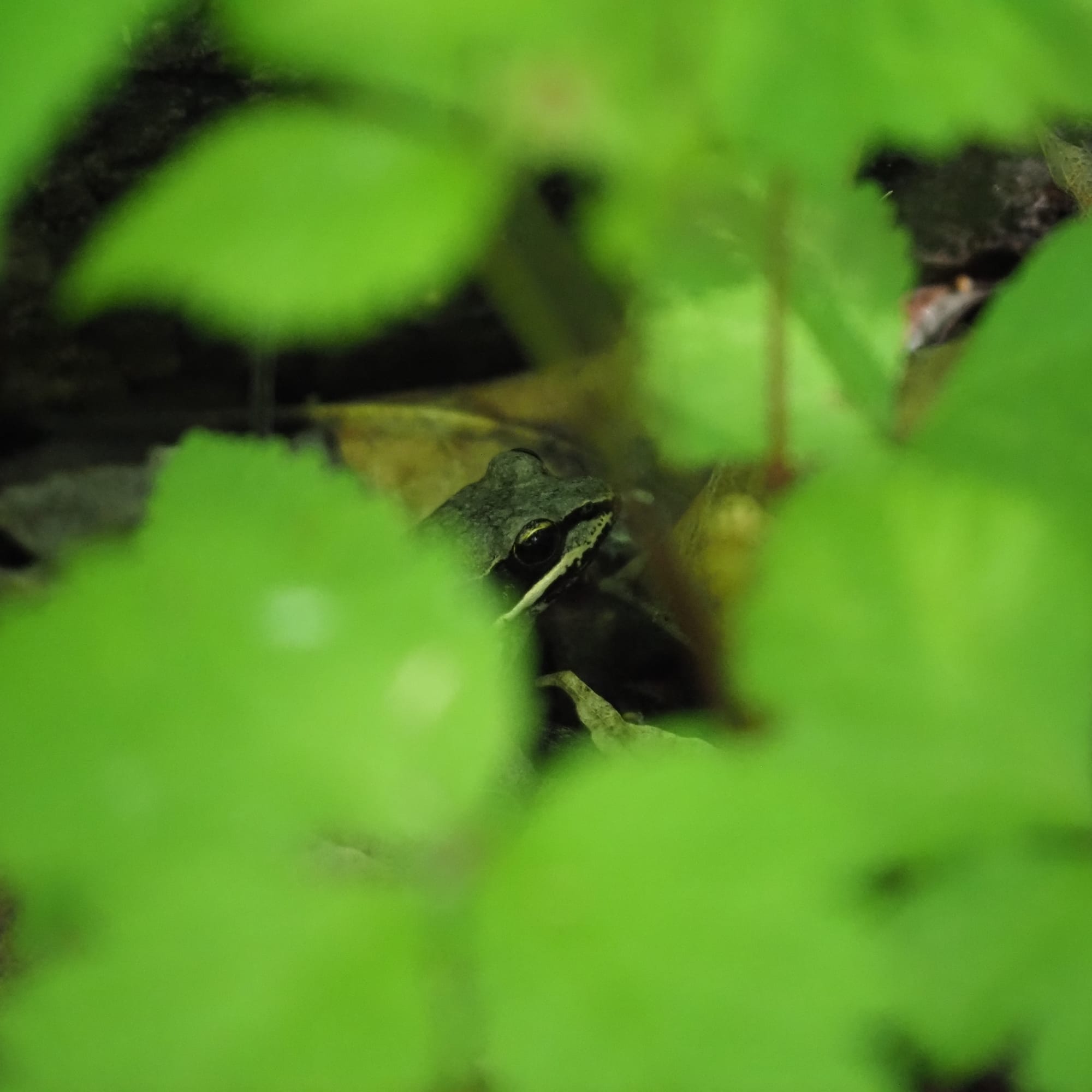
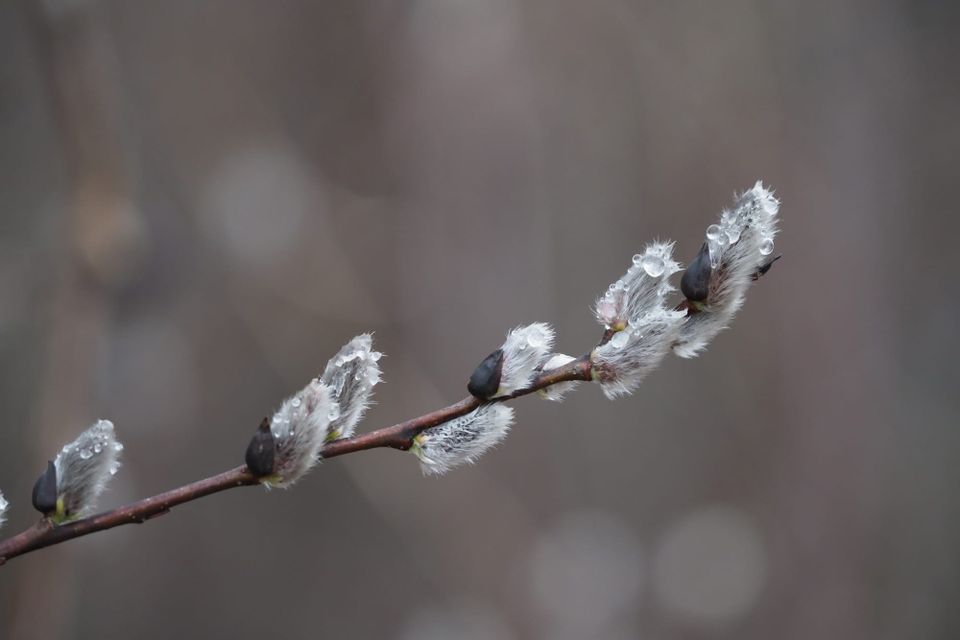
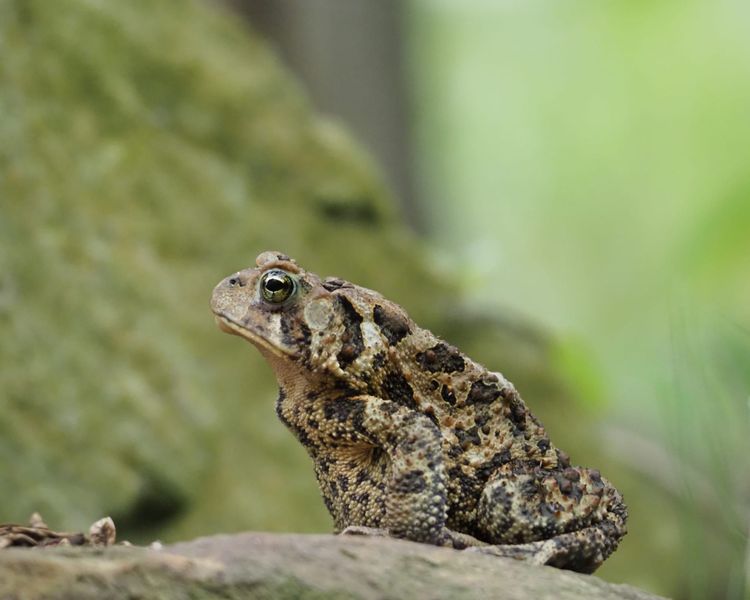
I long to dip my willow-toes into the river, to dive feather-wrapped into the staghorn sumac stand, to sink my frog-body into the cool relief of a vernal pool. What brings me closer, lets me slip into the skin of the world?
Over two years ago, I saw a bird.
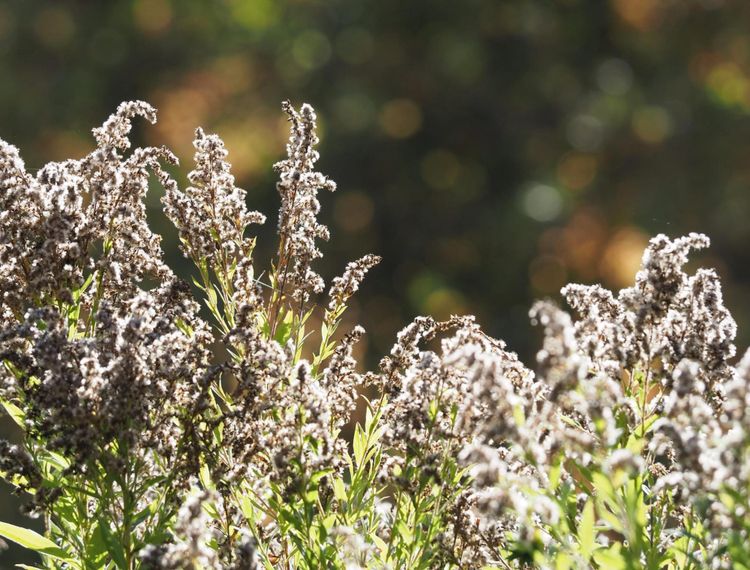
I used to think that other beings—the ones we call "wild"—were somewhere else. That transformative encounters must be sought out in distant places (surely a long car ride was needed at the very least?). A kind of transcendent connectedness just didn't seem possible in the scrubby new-growth forest and fields near my home, in the built up shorelines of familiar lakes and rivers, in what fragmentary spaces remained between housing developments, warehouses, and industrial agriculture. I don't want to downplay the severity of habitat loss, how much life has disappeared, how much quieter this world has become, and how horrific that reality is. But all of us are still of this world, all of us living are still here, and I have begun to see through the doorways opened by attentiveness, to peer down green hallways I thought closed to me.
It's dizzying to accept all other life as real as your own, if you, like me, like most settlers, have been raised to think otherwise. Have been raised to be lonely. To be one body, solid and separate. And it is incredibly difficult, I think, to both wish to act and to know what actions to take if you do not feel yourself to be part of a vast community of others. I'm often still hopelessly distracted and unaware. I have not yet learned discernment, or to paraphrase Robin Wall Kimmerer, to turn "attention to intention to action." But I am learning. As much as I've been carefully remembering names, calls, taxonomic classification, I've also been learning to go more slowly, to look more closely, to wait.
And I am beginning to know them, now. The hawks and the sparrows, the coral fungus and pine trees. In their presence I have found reasons to wake up, to step outside, to be alive, and the weight of reciprocity is settling into my body. I owe them. We owe them. We are of the same matter, the same world, the same endless cycles. All deserving of existence.
There was much I read before and during the writing of this essay that influenced and stuck with me, so I would like to offer this short bibliography of sorts, sharing some of the books, essays, and poetry that helped shape this essay.
Forest Euphoria: The Abounding Queerness of Nature by Patricia Ononiwu Kaishian (book): "Being in the culvert or the forest was a chance to move amphibiously, to shape-shift, to creep, to oscillate like algae in a riffle, to be neither boy nor girl and have no particular identity at all."
Living Like Weasels by Annie Dillard (essay): "I tell you I've been in that weasel's brain for sixty seconds, and he was in mine. Brains are private places, muttering through unique and secret tapes—but the weasel and I both plugged into another tape simultaneously, for a sweet and shocking time."
The Way In by Linda Hogan (poem): "To enter life, be food."
Inside the Animal Internet by Steph Yin (article): "[t]here are other stories, of how it's our job as a species to know and manage, how nature's value is couched in its utility to us, and how the answer is so often more instruments and more data."
Creatures That Don't Conform by Lucy Jones (essay): "[h]ow might a kinship with slime smother our inadequate but still-dominant ideas about the world?"
The Language of the Living World by Robert Macfarlane and Amy Martin (interview): "How do we, as Robin Wall Kimmerer puts it, turn attention to intention to action…it does begin in something like the ethical, something like even the aesthetic, something devotional. Attention, intention, action."
Member discussion